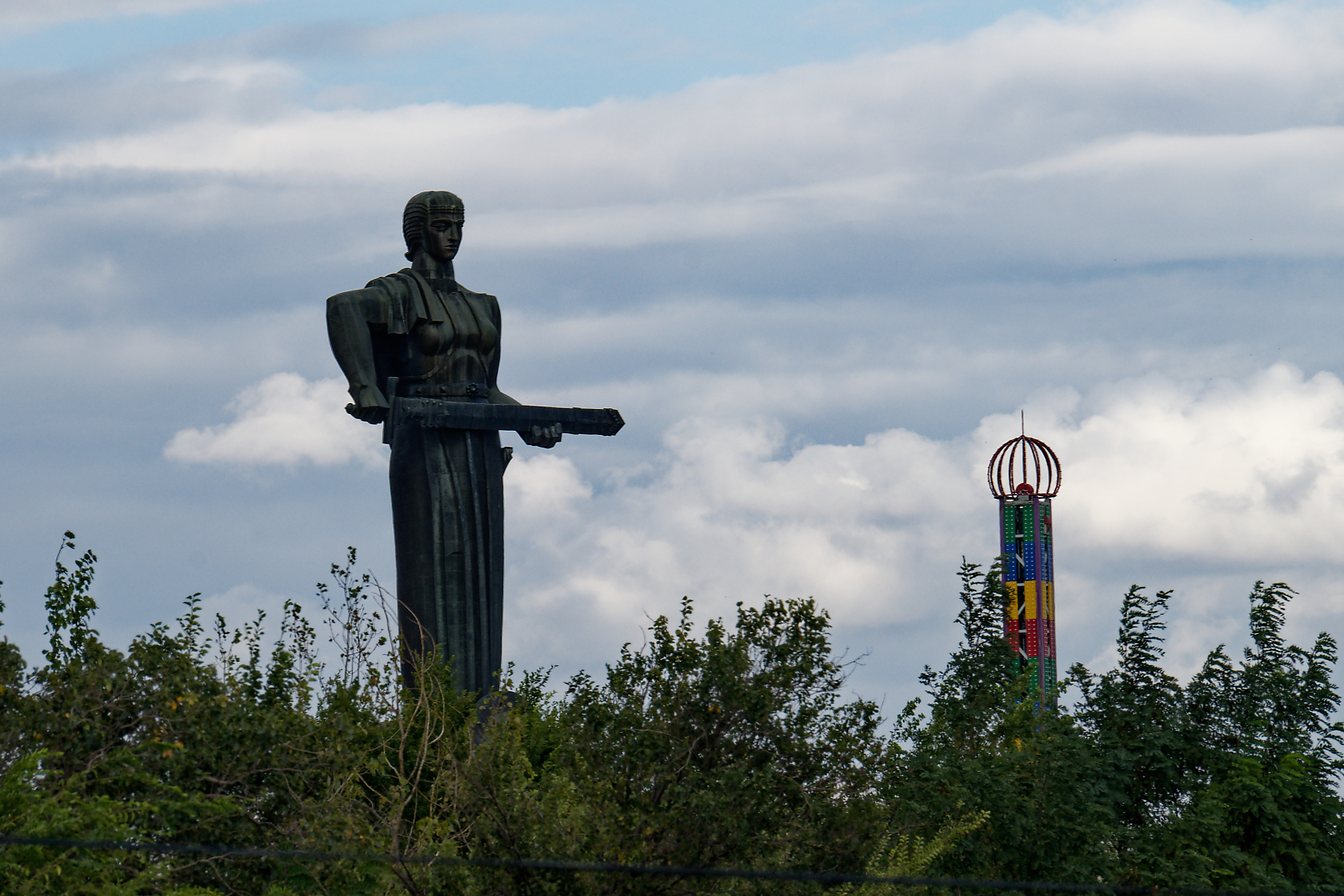
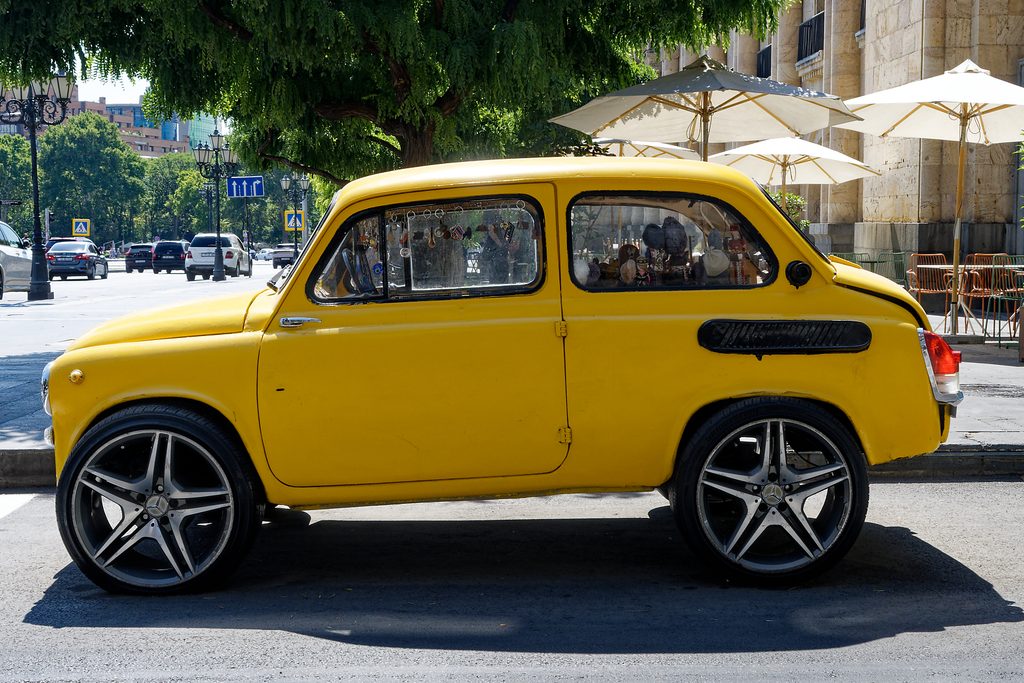
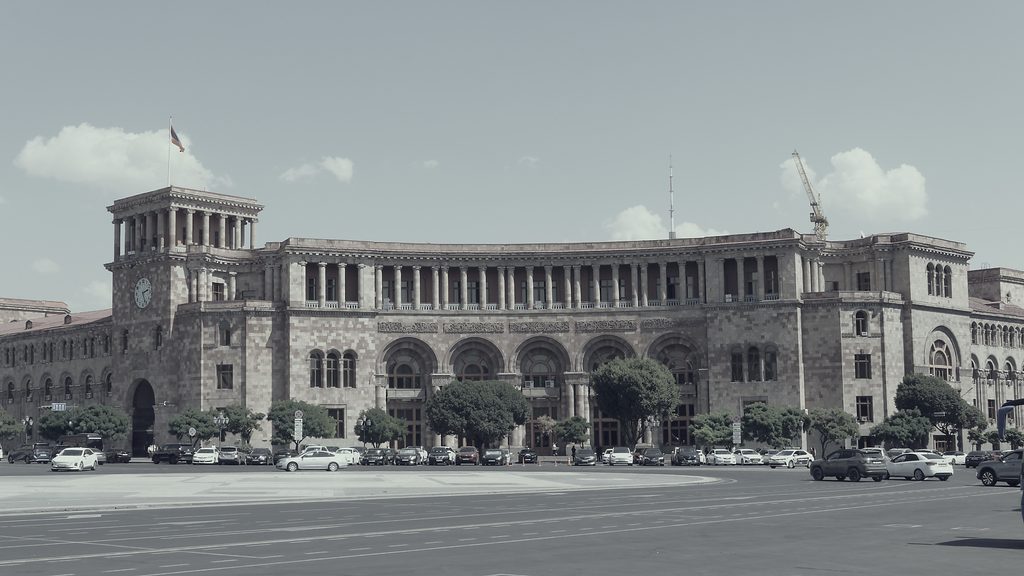
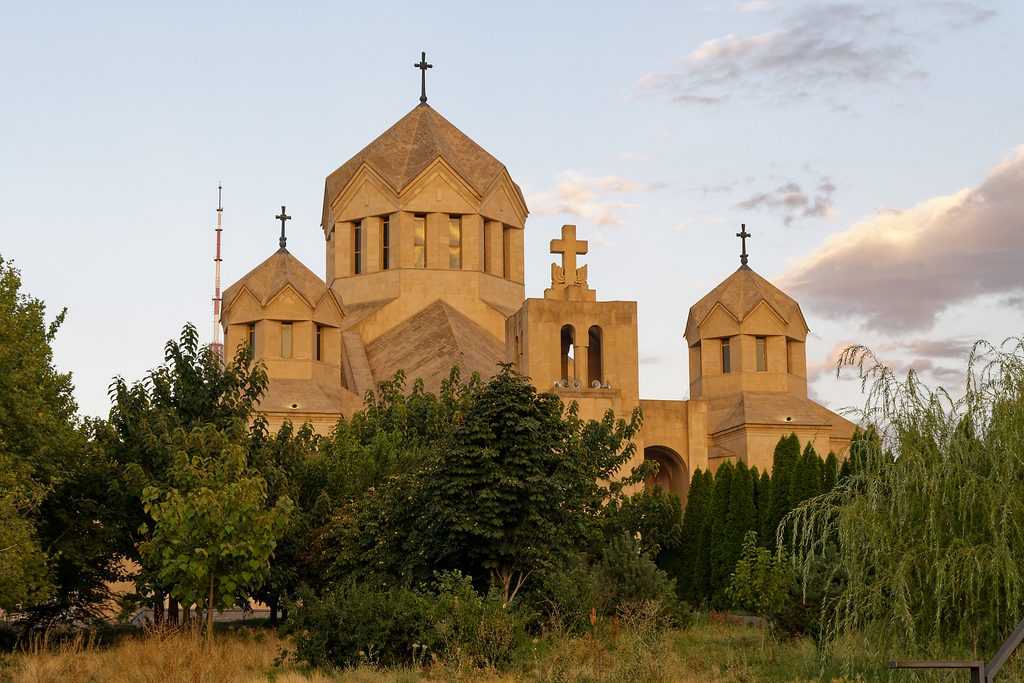
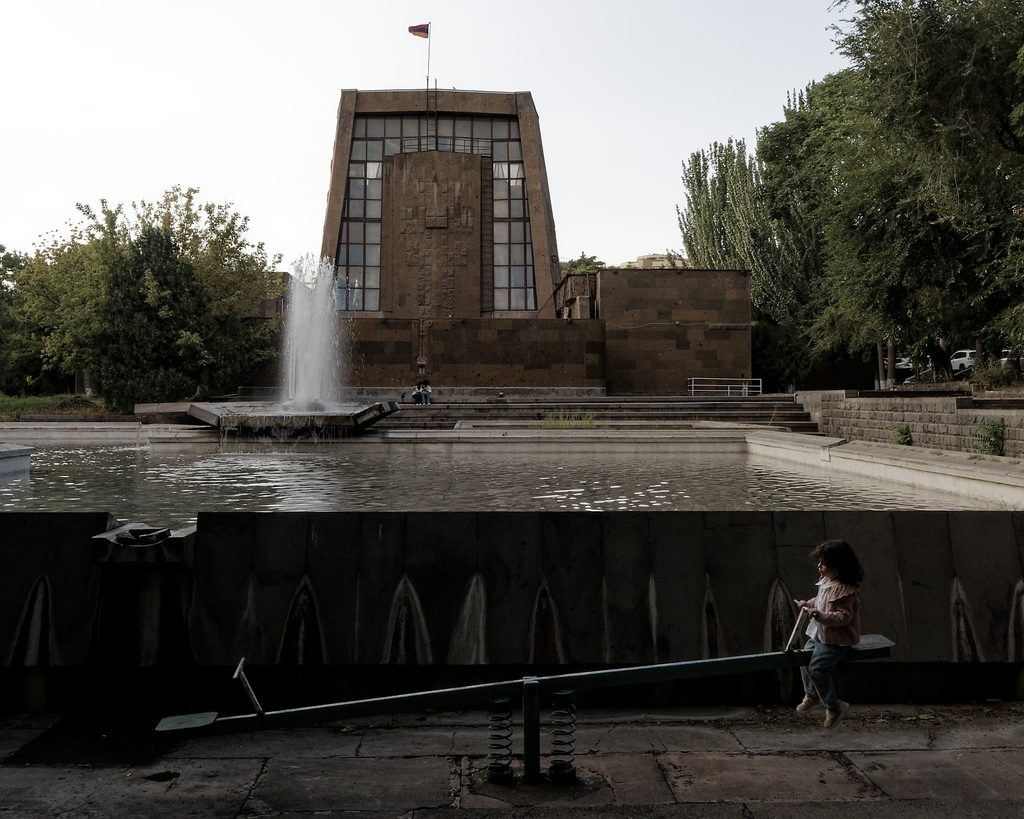
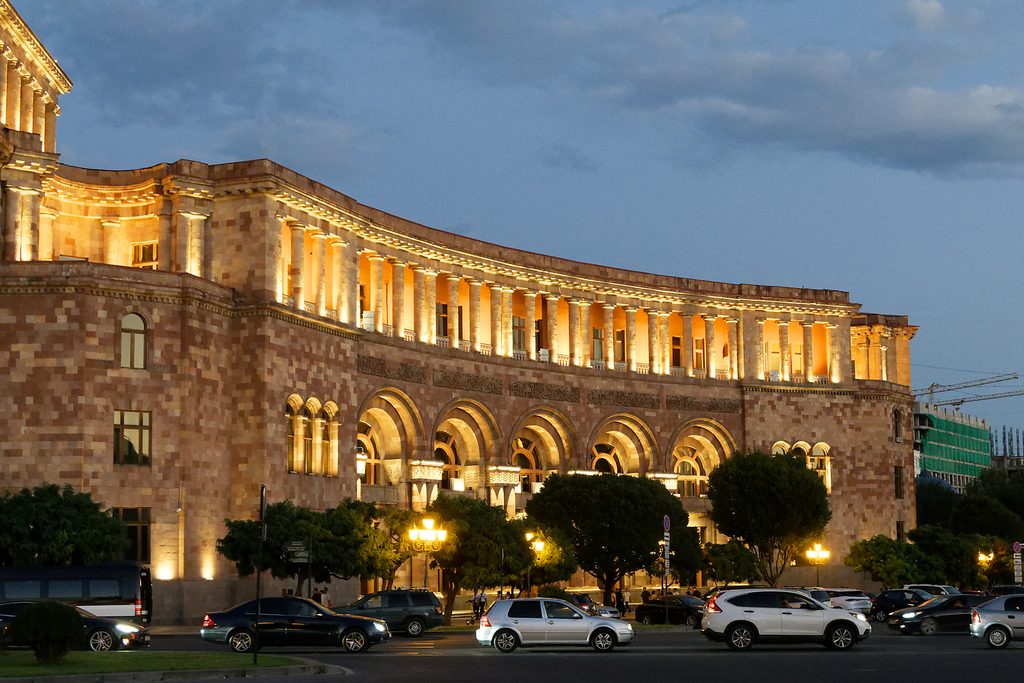
The Armenian parliament building, Saint Gregory the Illuminator Cathedral, – and a 1970s Soviet museum, (if I read the internet correctly).
I am on a quick visit to Yerevan, the capital of Armenia. Fun facts: the population of Armenia is just over 3 million. More than one million Armenians live in Yerevan. Armenian is written in Armenian – an alphabet invented by Armenian monk Mesrop Mashtotsin in 405 AD. Each of the 36 characters in his original alphabet corresponds exactly with a phonemic sound. Armenian is an independent Indo-European language which has been influenced by languages such as ancient Iranian – Pehlevi.
This genetic study suggests that the Armenians are largely indigneous to the region and not the result of a late migration, though there was significant migratory input in the early Bronze Age. The National Museum of the History of Armenia seems to fix the start of the Armenian people to 6th to 4rd century BC. They seem to see the Urartian state, which fell in the 7th century BC, as the predessor state. By the way, this is an amazing museum. I had to visit twice to really do it justice, though it would bear several more visits. The museum traces the history of Armenia, or, at least, the land which is now Armenia, (and more – of course), from the Stone Age to the brief Armenian Republic which came into existence at the end of WWI and lasted until the Bolshevisks marched in. It is interesting that this magnificent museum doesn’t mention the Soviet period at all. It is as if they want to see the continuity of their country from the First Republic to the present day and just treat the Soviet period as an unfortunate blip. The museum describes, and illustrates with a truly amazing collection of objects, the history of Armenia. They have been invaded at various times by virtually everyone; Persians, Romans, Arabs, Mongols, post-Mongol kindgoms, the Byzantine Kingdom, Selucid Turks, Ottomans, and Russians. The museum describes in a moving way the Aremenian genocide of 1915 – though it enumerates pogroms which took place under the Ottomans in the late 19th century. The evidence presented is convincing. That the Turks – who had become a more nationalist movement than the Ottomans – set out to drive the Armenians out of what was then Western Aremenia does not seem to be disputed. Whether or not it was a “genocide” may in the end by a matter of defintions, but it is crticial to Armenian self-understanding that it was a genocide.
I’ve only been here for a short while, but already I can attest that Armenians are hospitable and friendly. In the centre of Yerevan you see, as you do in the centre of many other capital cities, a bubble of oppulence, and gilded people with gilded lives shopping. But, here, in the village where I am staying, it is a different story. Warm and friendly people. The baker who bakes my fresh bread, (which costs 20p a loaf), is hospitible – don’t worry if I don’t have the right money he says, as he puts the bread into my hands.
Hopefully, I’ll be reviewing a historic Armenian monastry in the next post.